Controlled Chaos, Carefully Delivered
By: VX
There’s a difference between anticipation and expectation.
Psychic Fever arrived in Seattle carrying both. For those who have followed since Hotline, a debut that signaled more than just entry, but intention their first tour stops weren’t just concerts. They were proof of concept. Seattle, it seems, was part of that test.
Where Psychic Fever distinguishes itself is in its refusal to flatten identity. Ryushin operates in duality, reserved off-beat, magnetic on it.
Ryoga brings a composed, almost editorial stillness, style-forward, intentional.
Weesa offers a quieter presence, one that reads less as absence and more as restraint.
Jimmy exists slightly adjacent to the group’s center, yet never disconnected. This is not uniformity. It’s curation. And it works.
The night began with visible friction. Crowd management felt reactive, not anticipatory. Systems that should have been seamless were still settling into place. A quiet admission from a team member from the tour management company, that Seattle was a “test” city, reframed the experience in real time. But a test still has an audience. And an audience expects fluency.
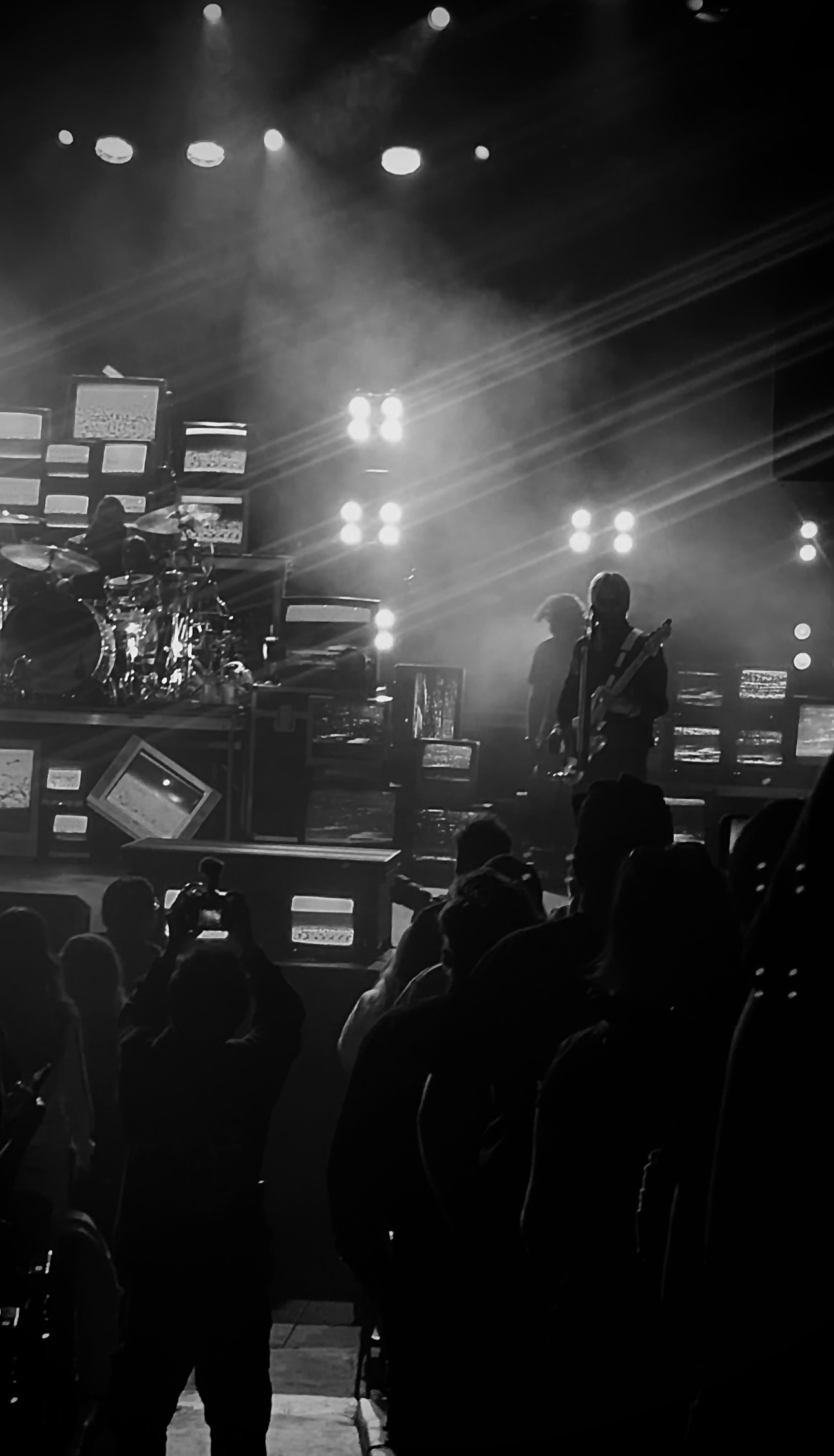
What’s notable, however, is how quickly the imperfections became peripheral. Because once the performance began, structure gave way to something far more compelling: presence. From the opening moments, the group leaned into what they do best, contrast.
Tsurugi and Ren emerged as anchors of the night. Their performances were not simply energetic, they were deliberate. Every movement carried intention, every interaction felt measured yet sincere. They understood the rhythm of engagement, and more importantly, how to sustain it.
Then there is Kokoro, whose stage presence exists somewhere between performance and instinct. Charisma, in his case, is not projected. It’s conversational. Fluid. Disarming in a way that feels almost unscripted. Moments of fan interaction blurred the line between artist and audience, not in spectacle, but in tone. Casual exchanges became part of the experience itself, subtle but effective.
The setlist moved with clarity.
“Hotline” and “Best For You” grounded the performance in familiarity, while “Psyfe Cypher” expanded it, sharper, louder, more kinetic. It was here that the group’s dynamic fully crystallized. The rap line, in particular, shifted the energy of the room. Not exaggerated, not overplayed, just controlled impact.
There’s a tendency to filter every global boy group through a K-pop lens. Psychic Fever resists that framing entirely. They are not performing a genre, they are building a language. One that prioritizes individuality over synchronization, tone over perfection, and presence over polish.
Seattle may have been a test. But the result was clear. Not flawless. Not overly refined. But undeniably effective. The performance didn’t rely on perfection to resonate, it relied on authenticity, on contrast, on moments that felt unmanufactured. And in a landscape increasingly defined by control, that lack of over-curation becomes its own kind of luxury.
The question isn’t whether they succeeded. It’s how much sharper it becomes the next time they return. These patterns are essentially collections of blocks that are pre-arranged and configured, which you can insert into your posts and pages.
Until next time,
VX